


What Is Rust and How Can It Be Removed?
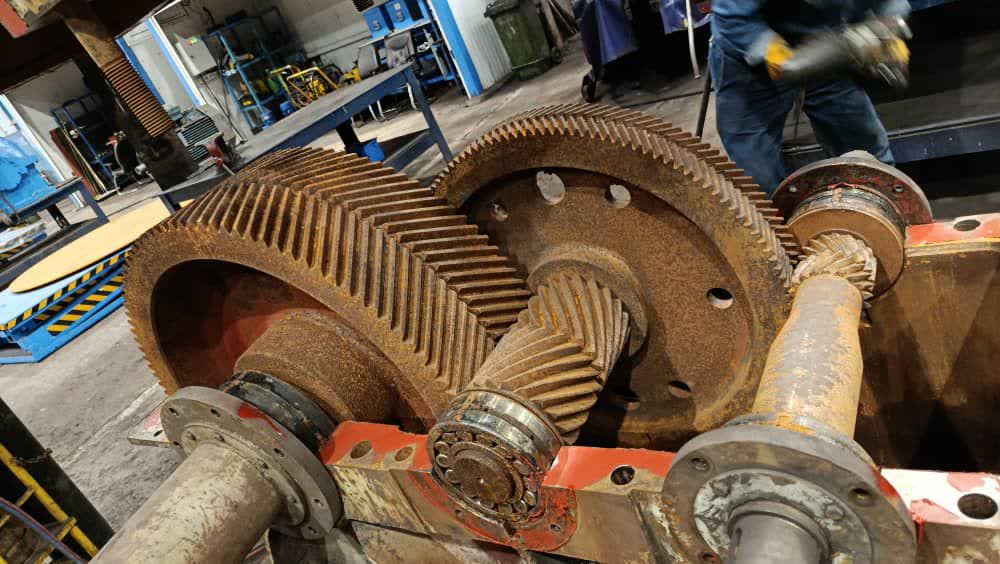
A small brown spot on metal may seem insignificant at first glance; but this small spot is the beginning of a process that can cause billions in damage. Rust is the silent enemy of industry; a threat that starts with a simple chemical reaction between iron, oxygen, and moisture, and leads to gradual equipment destruction, reduced efficiency, increased repair costs, and even complete production line shutdown.
According to global reports, corrosion and rust account for approximately 3 to 4 percent of countries’ GDP annually; an astronomical figure that demonstrates the importance of combating this phenomenon. In this article, we examine the nature of rust, its aggravating factors, and scientific and practical solutions to counter this hidden threat.
How Does Rust Form?
Rust is an electrochemical process in which iron reacts with oxygen and moisture to form hydrated iron oxide (rust). This process begins when the iron surface comes into contact with moisture (water or water vapor) and oxygen, and a small electrochemical cell forms on the metal surface; in this cell, iron acts as the anode (negative pole) and oxygen acts as the cathode (positive pole), with water acting as the electrolyte.
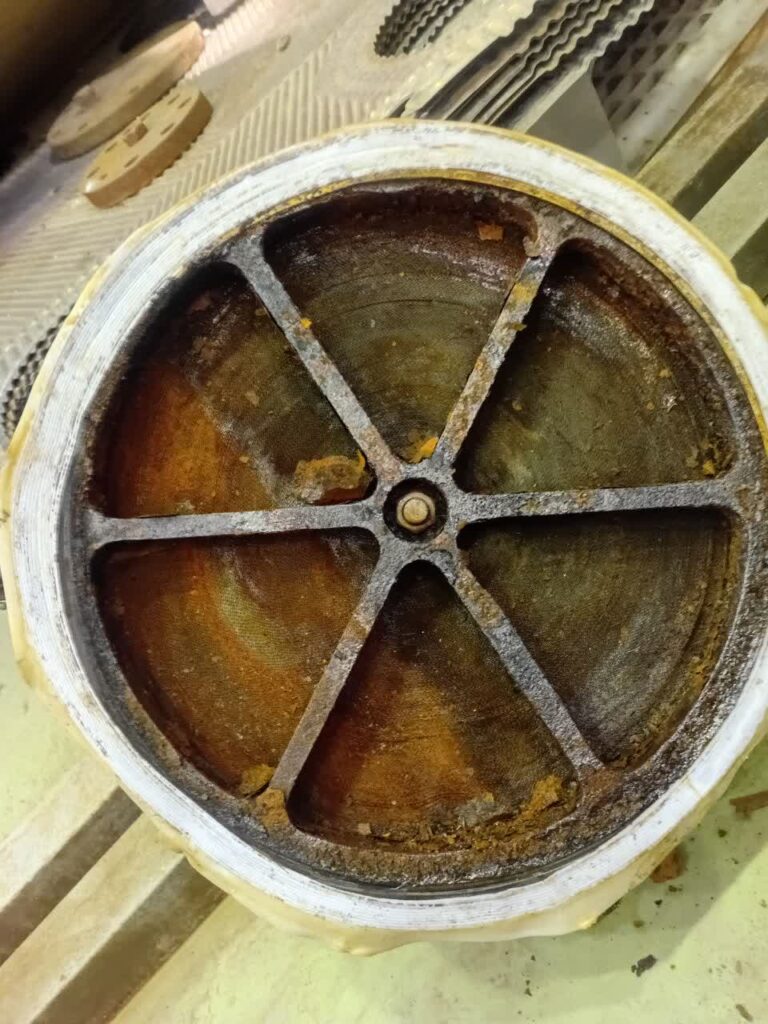
At the anode, iron loses electrons and converts to iron ions (Fe²⁺), and at the cathode, oxygen receives electrons and reacts with water to produce hydroxide ions (OH⁻). The iron and hydroxide ions then combine to form iron hydroxide (Fe(OH)₂), which, upon further reaction with oxygen, converts to ferric hydroxide (Fe(OH)₃); this compound is the brown-orange rust seen on metal surfaces.
Various factors accelerate this process; high humidity provides the electrolyte environment and multiplies the rusting rate, saltwater increases electrolyte conductivity due to chloride ions and accelerates rusting, acidic gases such as SO₂, CO₂, and H₂S combine with water to produce acids that attack the metal, high temperatures double the rate of chemical reactions for every 10-degree increase, and surface contamination, mechanical stresses, and contact with other metals are other aggravating factors.
What Is a Rust Remover?
A rust remover is a specialized chemical compound designed to remove rust from metal surfaces and is divided into several categories based on its mechanism of action, each with a different mechanism for rust removal; acidic rust removers contain mineral acids such as hydrochloric acid, sulfuric acid, or phosphoric acid that react with iron oxide and convert it into water-soluble salts that are washed away from the metal surface.
Phosphate Derusters contain phosphoric acid that reacts with rust and converts it into iron phosphate, a stable and insoluble compound that remains as a protective coating on the metal surface and prevents re-rusting. Organic rust removers contain organic compounds such as citric acid, oxalic acid, or tannic acid that form complexes with iron ions and dissolve rust, and due to their greater safety for the base metal and environmental compatibility, they are used for sensitive surfaces and precision parts.
In fact, rust removers contain compounds that form strong chemical bonds with iron ions and separate them from the metal surface; when a rust remover is applied to a rusty metal surface, it first penetrates the rust layers and contacts the iron oxide, then the active compounds of the Derusters react with the iron oxide and dissolve it or convert it into stable compounds, and subsequently the dissolved or converted rust is separated from the metal surface. Some rust removers, such as phosphates, create a protective layer on the metal surface that prevents re-rusting.
Types of Rust Removers
Rust removal agents are divided into the following categories based on their mechanism of action:
- Acidic rust removers: Dissolve rust but may damage the base metal.
- Phosphate rust removers: Convert rust into a phosphate coating that itself is a protective layer.
- Organic rust removers: Dissolve rust by forming complexes with iron ions.
Why Is Rust Removal Essential?
- Increased equipment lifespan: Removing rust prevents further metal destruction.
- Improved efficiency: Clean and shiny surfaces perform better.
- Reduced costs: Replacing rusted equipment is expensive.
- Increased safety: Rust can lead to structural failure and life-threatening accidents.
Introducing Z-Plus 24 Rust Remover
Z-Plus 24, a product of the knowledge-based company NanoGray Materials, is a powerful and advanced rust remover that, with its innovative formulation, removes rust from the root and delivers a shiny, protected surface.
Rust is more than just a cosmetic issue; this destructive phenomenon reduces the strength of structures, multiplies repair costs, and in some cases leads to complete production line shutdown. In such conditions, using a rust remover not only removes rust from the root but also, by creating a stable protective layer, significantly increases the useful life of equipment and prevents heavy and irreparable damage.
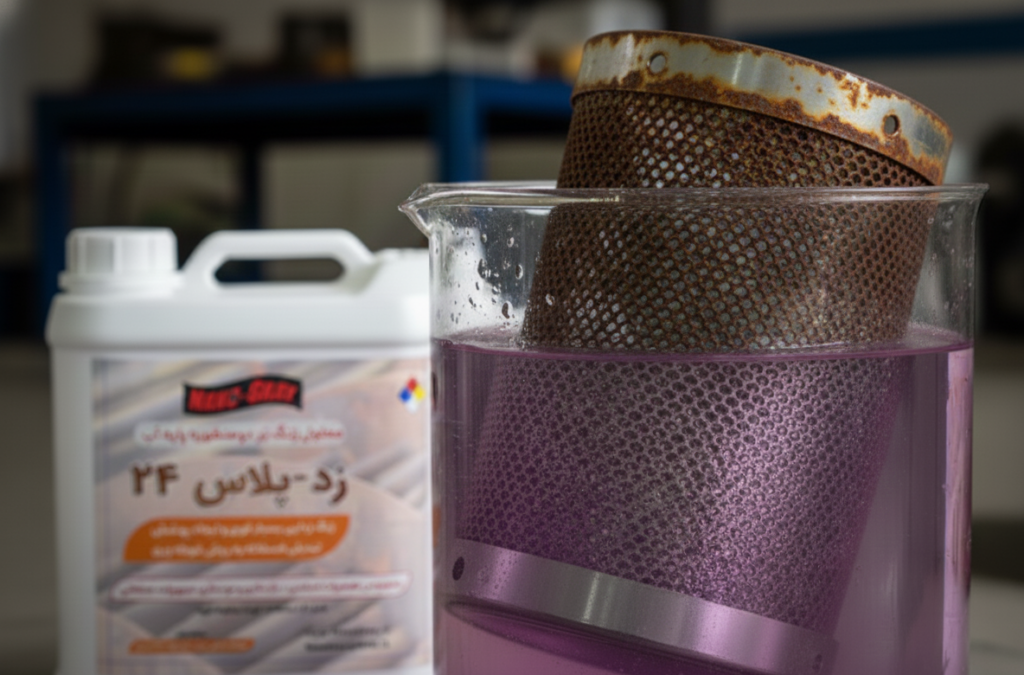
Key Features of Z-Plus24:
- Rapid and deep rust removal
- No damage to the base metal
- Creates a phosphate coating
- Available in two types: liquid (immersion) and gel
- Non-toxic and environmentally friendly
- No need for sandblasting
Applications of Z-Plus24 in Rust Removal
Z-Plus 24 is used in various industries:
- Oil, gas, and petrochemical industries: Removing rust from pipes, flanges, valves, and tanks.
- Steel industry: Removing rust from metal structures, gears, and equipment.
- Automotive industry: Removing rust from car parts and chassis.
- Construction and bridge building: Rust removal from metal structures and rebar.
Steps to Use Z-Plus24 (Gel)
- Initial cleaning: Clean the surface of dust and surface contaminants.
- Apply Z-Plus 24: Apply the gel rust remover to the rusty surface with a brush.
- Wait: Depending on the severity of rust, wait 15 to 60 minutes.
- Rinse: Wash the surface with high-pressure water.
- Dry: Dry the surface to allow the phosphate coating to form.
Comparison of Z-Plus24 with Traditional Methods
| Traditional Method | Z-Plus 24 |
|---|---|
| Manual sanding (time-consuming) | Rapid and deep removal |
| Damage to base metal | No damage to metal |
| No protection after rust removal | Creates protective phosphate coating |
| Life-threatening hazards (dust, cutting) | Safe and non-toxic |
Conclusion
Rust is a serious threat to industrial equipment that can lead to heavy damage. Using a powerful and safe rust remover such as Z-Plus 24 not only eliminates rust but also, by creating a phosphate coating, prevents its re-formation. This product is a smart investment for increasing equipment lifespan and reducing costs.
For consultation and ordering Z-Plus 24, contact NanoGray Materials experts: +989007397906
